
“More than half the world’s population could be living with fatty liver just 15 years from now.”
The Untold story of Non Alcoholic Fatty Liver Disease(NAFLD)
We fear diabetes. We fear cancer. We fear heart disease. But there’s one disease that quietly affects more people than all three combined—fatty liver.
In India, nearly 38.6% of the population, which is more than 56 crore people, are living with Non alcoholic fatty liver disease(NAFLD). To put that into perspective, the number of Indians with fatty liver is greater than the entire population of South America, which is 43.8 crore.
Now, you might wonder what is happening globally. When we look at it globally, in 2021, an estimated 1.27 billion people worldwide were living with fatty liver, which is nearly 1 in 6 people on Earth. And this disease is now claiming lives too. According to the National Institutes of Health, in 2019, 168,969 people worldwide died from non-alcoholic fatty liver disease. But here’s the burning question, if one in three of us already has it, what does that mean for our future? And is there really a way to turn this diagnosis around? So the question is ‘how is your liver doing’
Before we go any further, let’s get into the nitty gritty of the subject. What is this thing called fatty liver, exactly? Fatty liver disease happens when too much fat builds up in the liver, more than 5 to 10% of the organ’s weight. Over time, this buildup can damage liver cells and lead to inflammation, scarring, or even liver failure. And there are two main types, NAFLD, Non-Alcoholic Fatty Liver Disease, which is not caused by alcohol. And the other one, AFLD, Alcoholic Fatty Liver Disease, which is caused by heavy drinking of alcohol.
Within this NAFLD, there are two stages: steatosis, which is the building up of fat in the liver, often unnoticed without symptoms or inflammation. NASH, Non-Alcoholic Steatohepatitis, where there is fat plus inflammation and damage, which can progress to cirrhosis, liver failure, or even liver cancer.
So we have understood what this disease actually is, but, how does all that fat end up in your liver in the first place? Imagine your liver as a busy kitchen that constantly burns and processes fuel. When you’re overweight or obese, that kitchen gets flooded with more fat than it can handle. If you have prediabetes or type 2 diabetes, your body resists insulin, and instead of burning sugar properly, your liver turns the excess sugar into fat. High cholesterol and triglycerides? That is like pouring extra oil into the system; again, it piles up inside the liver. And if you add high blood pressure into the mix, your liver gets yet another blow to its balance.
The primary cause factor is your diet. Sugary drinks, fried snacks, and refined carbs overload the liver with fat-producing calories. And if you are leading a sedentary lifestyle, like long hours of sitting and little exercise, it slows down your metabolism, making it easier for fat to deposit in the liver.
But it’s not only lifestyle-related. Some people develop fatty liver from rapid weight loss, crash diets, bowel diseases, certain medicines or some cancer treatments. Genetics can also play a role, because some people inherit a higher risk of having fatty liver. Even environmental factors, such as exposure to pollutants, endocrine disruptors, or toxins, can worsen liver health. So… fatty liver is not born from one cause, it’s a complex web of lifestyle, health conditions, diet, genes, environment, and even how you sleep. And because all of this works silently, most people don’t realize their liver is under attack until it’s too late.
Most people with fatty liver don’t feel anything at first. It’s often called a “silent” disease, and many find it out by accident during routine blood tests or ultrasounds. That’s why you’ll often hear people say things like, “I found out I had fatty liver while getting an ultrasound for PCOD,” or, “I was just checking my abdomen, and boom, fatty liver showed up in my reports.”… But when symptoms do show up, they may include tiredness or fatigue, pain or heaviness in the upper right side of the belly, unexplained weight loss, swelling or discomfort, elevated liver enzymes in blood tests, etc.
But here’s the most alarming part… this is not slowing down anytime soon. Based on mathematical modeling studies, the burden of fatty liver is expected to grow dramatically over the next decade. According to the National Institutes of Health, the global prevalence of NAFLD is forecasted to reach nearly 55.4% by the year 2040. That means more than half the world’s population could be living with fatty liver just 15 years from now.
Around 20% of people with NAFLD will go on to develop NASH, Nonalcoholic steatohepatitis, and some cases may progress to cirrhosis and hepatocellular carcinoma (HCC),the most common form of liver cancer. In 2021 alone, over 138,000 lives were lost to MAFLD, and over 97,000 of those deaths were caused by complications from MAFLD-related cirrhosis. These numbers are a powerful reminder that without early detection and lifestyle changes, what looks like a manageable condition today could become a health crisis tomorrow.
While the numbers look scary, the solution isn’t complicated. Small lifestyle changes can make a big difference in turning fatty liver around.
Let’s take a simple example.
Meet Mr. X. He’s 35, about 175 cm tall, and weighs 91 kg. His recent ultrasound showed he has Grade 1 fatty liver. Now, his doctor tells him that losing just 5–10% of his body weight, which is about 4.5 to 9 kg, could already start reversing the fat in his liver. Sounds doable, right?
So what does Mr.X do?
Diet-wise, he makes a few smart swaps. And of course, fried snacks and processed carbs are avoided as much as he can. His breakfast, lunch and dinner will focus on balanced plates: more vegetables, lean proteins, whole grains, fresh fruits, and healthy fats. And in terms of exercise, over 150 minutes of moderate activity each week, enough to help burn liver fat naturally. In some cases, under medical advice, people like him might be prescribed supplements to support their liver health. But supplements alone won’t help unless diet and movement come first. The result? After 5 months, Mr. X has lost 6 kg. His energy is up, his liver enzymes are improving, and his Grade 1 fatty liver is already showing signs of reversal. All through steady, doable changes, no crash diets, no extreme workouts.
And stories like Mr. X’s aren’t rare.
At Herbally Touch, we’ve seen countless patients struggling with NAFLD make similar transformations. With proper diet corrections, lifestyle modifications, and the right Ayurvedic support, many have not just managed fatty liver, but reversed it successfully.
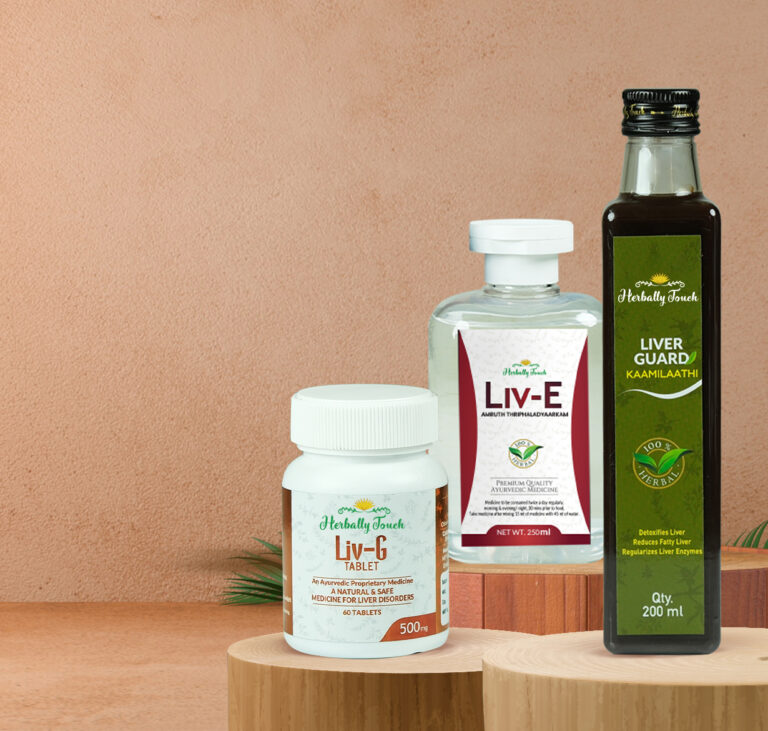
One of the most trusted formulations in this journey is our Liver Guard Combo, developed to restore liver health naturally. It includes three powerful Ayurvedic medicines, Liv E, Liv G, and Liver Guard, each made with ayurvedic herbs known to remove excess fat from the liver, balance liver enzymes and boost metabolism. When combined with mindful eating, regular movement, this ayurvedic support has helped countless individuals regain their liver health and renew their lives.
So remember, fatty liver is not a dead-end diagnosis. With the right approach, you can turn it around. So, whether you’re young or old, fit or struggling, as i said in the beginning it’s worth asking yourself, “How’s your liver doing?”